
Emotional intelligence as the cornerstone of health: towards a new pedagogical practice
DOI:
https://doi.org/10.66707/getc.v1i01.55Keywords:
Social-emotional learning, Psychological well-being, Comprehensive education, Teaching practice, Comprehensive healthAbstract
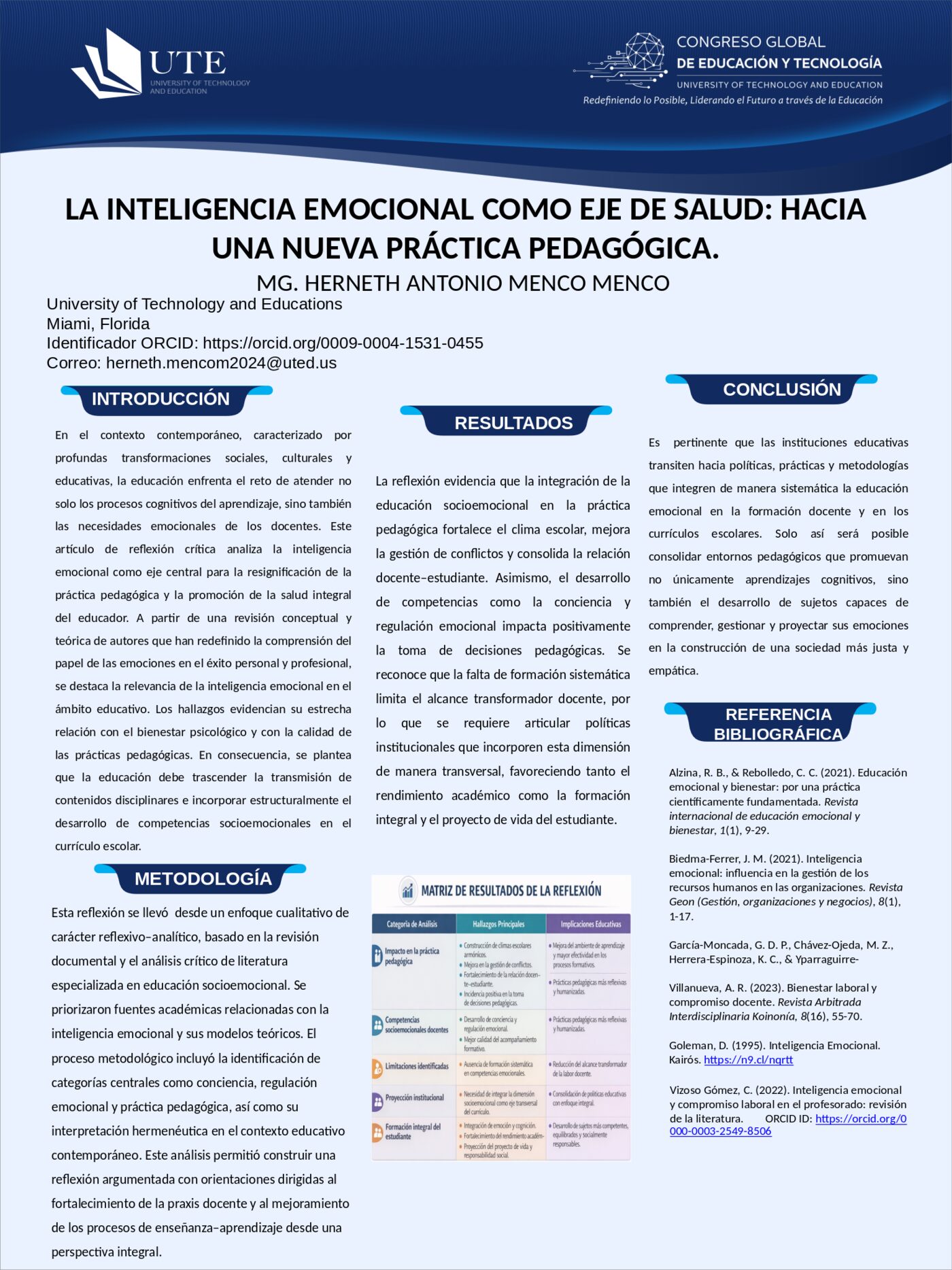
Emphasizing that the contemporary context is surrounded by a series of social, cultural, and educational transformations, where education faces the challenge of responding not only to the cognitive aspects of the teaching-learning process but also to addressing the needs and emotional intelligence (EI) of teachers in order to strengthen their pedagogical practices. Consequently, the purpose of this critical reflection article is to analyze emotional intelligence as the epicenter of comprehensive health for the redefinition of pedagogical practice, based on a conceptual and theoretical review of the main contributions of authors whose studies redefine public understanding and the role of emotions in personal and professional success. The findings on the importance of emotional intelligence and its relationship to psychological well-being are recognized by the rise in the inclusion of this topic observed worldwide, which urges that education cannot be limited to the transmission of disciplinary content, but must structurally and pedagogically incorporate the implementation of social-emotional competencies into its curriculum. Finally, this reflection leads to suggestions for the improvement of pedagogical practices on the part of teachers, who are the first to be guided, trained, and supported in the proper management of emotions and, therefore, in how to manage their own EI.
Downloads
Downloads
Published
How to Cite
Issue
Section
License
Copyright (c) 2026 Global Education and Technology Congress

This work is licensed under a Creative Commons Attribution-NonCommercial-ShareAlike 4.0 International License.


