
Coexistence and peace in the rural school environment through the development of civic competencies in primary education
DOI:
https://doi.org/10.66707/getc.v1i01.56Keywords:
Civic competencies, Education for peace, Hermeneutic education, Rural education, School coexistenceAbstract
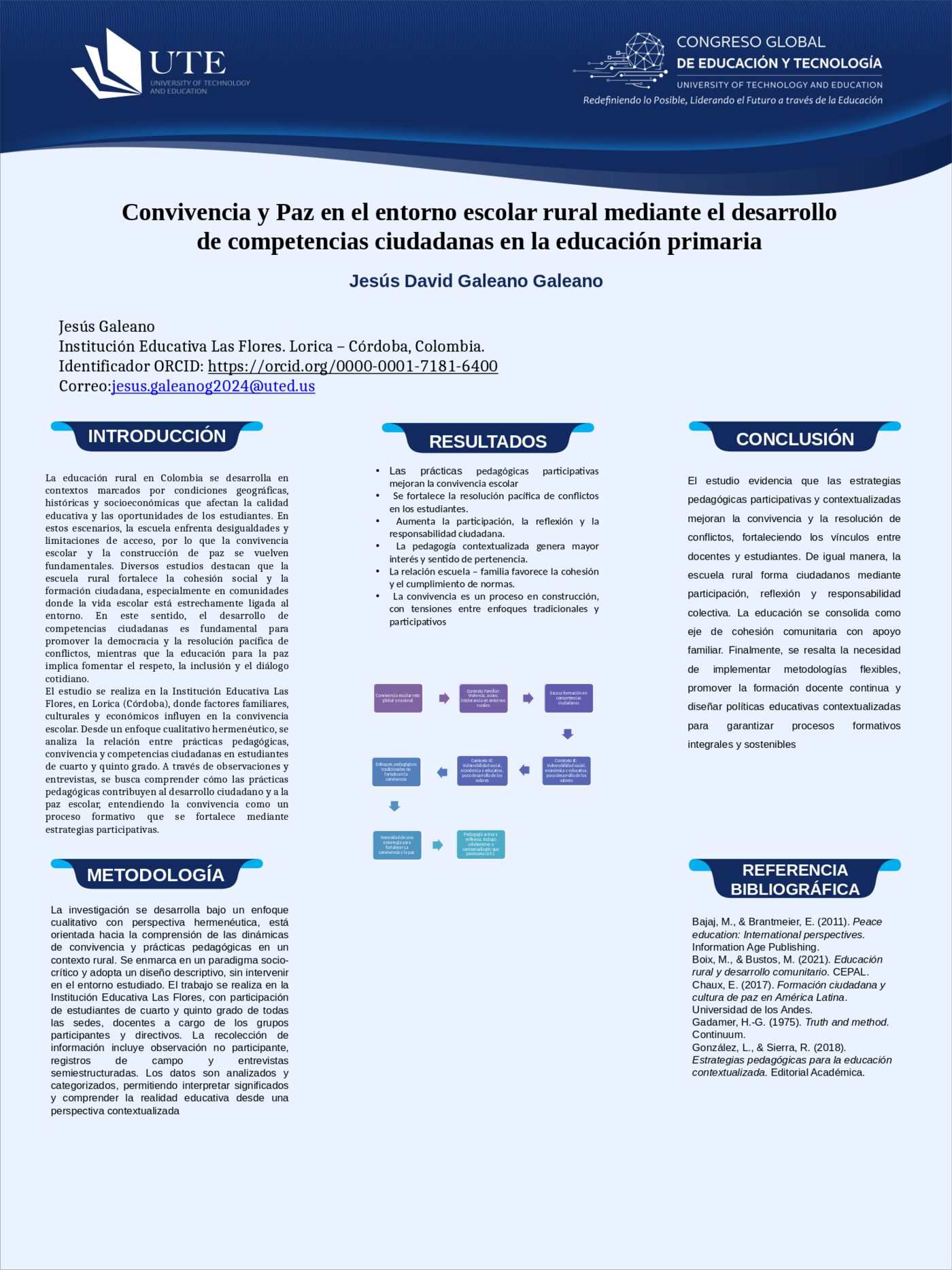
School coexistence and peace in rural contexts are among the most significant challenges for educational institutions seeking to promote comprehensive and democratic education. This qualitative hermeneutic reflective article explores the importance of strengthening these processes through the development of citizenship competencies in primary school students at Las Flores Educational Institution in Lorica, Córdoba, Colombia. Using unstructured observation, semi-structured interviews, and field notes, this study interprets pedagogical practices, interpersonal relationships, and contextual conditions that influence civic education. Data analysis is guided by a hermeneutic perspective that prioritizes understanding the meanings attributed by educational actors to their experiences of coexistence and democratic participation. Results show that participatory and contextualized methodologies foster the internalization of civic values, peaceful conflict resolution, and community co-responsibility, although challenges persist due to structural inequalities, traditional teaching practices, and resource limitations. This study offers theoretical and practical contributions for rural education, proposing relevant pedagogical strategies that integrate school coexistence, citizenship, and peacebuilding in everyday educational processes.
Downloads
Downloads
Published
How to Cite
Issue
Section
License
Copyright (c) 2026 Global Education and Technology Congress

This work is licensed under a Creative Commons Attribution-NonCommercial-ShareAlike 4.0 International License.


